
- Your cart is empty
- Continue Shopping


Blue Light And Sleep: The Evidence-Based Guide To Screen Time Before Bed (And How To Block It)
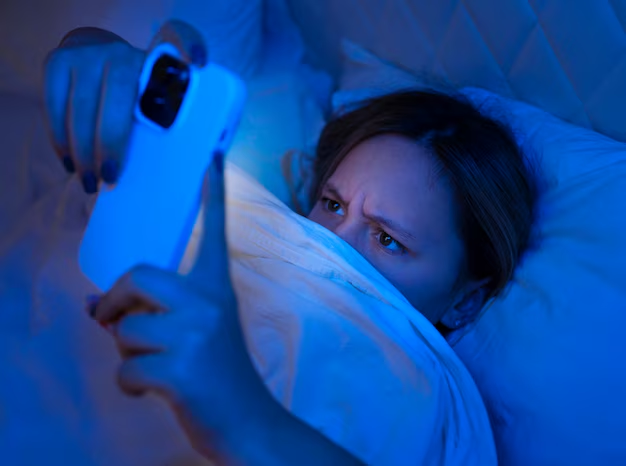
One in three adults worldwide doesn’t get enough sleep(World Health Organization,), and for many people the culprit isn’t “stress” alone it’s the glowing rectangle in their hand at 10:47pm. In 2026, our evenings are filled with streaming, scrolling, late-night work chats, and “just one more episode,” making blue light and sleep an everyday health issue rather than a niche concern.
This guide breaks down what blue light is, how screen time before bedaffects sleep quality, and what actually works for blocking blue light based on current research and practical clinical sleep-hygiene best practices. You’ll also get a step-by-step plan, a comparison table of interventions, and common mistakes that quietly keep insomnia going.
Disclaimer: The content shared here is for general informational purposes only and does not replace medical advice. Please consult a doctor or pharmacist before using any medicine product.
Why blue light and sleep are biologically linked
Blue light is high-energy visible light (roughly 450–495 nm). Daylight contains lots of it, which is beneficial in the morning because it helps set your circadian rhythm (your internal 24-hour clock). The problem is timing: blue-enriched light late in the evening can send your brain a “daytime” signal when your body needs the opposite.
Melatonin suppression and circadian delay
Light hits specialized retinal cells (intrinsically photosensitive retinal ganglion cells) that communicate with your brain’s master clock (the suprachiasmatic nucleus). Evening light exposure can reduce melatonin release and delay the circadian phase, shifting sleep later and making wake time feel harder.
In controlled laboratory settings, exposure to short-wavelength (blue) light in the evening has been shown to suppress melatonin more than longer-wavelength light under similar conditions (Harvard Health Publishing, 2020). This aligns with the broader consensus that spectrum, brightness, distance, and duration all matter not just whether a device is “on.”
It’s not just light: stimulation, stress, and “infinite scroll”
Even if you remove most blue wavelengths, contentcan still disturb sleep. Social media and news can increase cognitive arousal (“one more post”), emotional activation, and stress factors strongly associated with longer sleep latency (time to fall asleep).
Large-scale observational work also links device use around bedtime to shorter sleep. For example, a cross-sectional study in Norway found that each additional hour of screen time after bedtime increased insomnia symptoms by 59% and reduced sleep duration by 24 minutes among students (Hysing et al., 2015). While this population is younger, the behavioural pattern late light plus stimulation translates widely.
What the research says about screen time before bed
Research generally points in the same direction: late-night device use is associated with later bedtimes, reduced total sleep time, poorer perceived sleep quality, and next-day sleepiness. The strength of the effect varies by age, content type, baseline insomnia risk, and light environment (a bright room vs. dim room).
Sleep timing, sleep quality, and next-day performance
A widely cited experimental study found that reading on a light-emitting eReader before bed (vs. a printed book) led to longer time to fall asleep, reduced evening sleepiness, suppressed melatonin, and reduced morning alertness(Chang et al., PNAS, 2015). This matters for safety and performance especially for drivers, healthcare workers, and anyone operating equipment.
On the public-health side, the CDC reports that adults should sleep at least 7 hours per nightfor optimal health (CDC, 2024). Habitual short sleep is linked with cardiometabolic risk, mood problems, and reduced immune function, making bedtime screen habits a modifiable risk factor rather than a “lifestyle preference.”
Children and teens are more vulnerable
Adolescents have a natural circadian shift toward later bedtimes, and screens can amplify that shift. The American Academy of Pediatrics continues to recommend consistent limits and device-free bedtime routines (AAP, updated guidance ongoing through 2024–2025). In practical terms: the younger the brain, the more protective your household rules should be.
How much screen time before bed is “too much” (and why it differs by person)
There isn’t a single universal cutoff, but sleep clinicians often use a behavioural benchmark: aim for 60–90 minutes screen-free before bedif insomnia, anxiety, or early morning wake-ups are present. If you’re a “good sleeper,” you may tolerate more – but tolerance can fade during stress, perimenopause, illness, or when your schedule shifts.
The four variables that determine impact
Edge cases: shift work, chronic insomnia, and medication
If you do shift work, your “biological night” may not align with local clock time. In those cases, light can be used strategically (bright light during your “day,” strong dimming and blue reduction before your sleep window). If you use prescribed sleep medicines (e.g., zolpidem or zopiclone), screens can be riskier because of impaired judgementand memory-related behaviours so plan your device use earlier and make “bed = sleep” more consistent.
Blocking blue light: what works best in real life (with comparison table)
People often focus on one solution (like blue-blocking glasses) and ignore the basics (brightness and timing). In practice, the strongest results come from stacking: reduce brightness, reduce blue, and reduce stimulation especially in the last hour before bed.
| Intervention | Best for | Typical effectiveness for sleep (real-world) | Common pitfalls |
| Screen-free wind-down (60–90 mins) | Insomnia, anxiety, frequent night waking | High(addresses light + stimulation) | Hard to sustain without a replacement routine |
| Night mode / warm display settings | People who must use devices | Moderate (helps spectrum, not stimulation) | Brightness often left too high; apps override settings |
| Lower brightness + dark-mode + dim room lighting | Most households | Moderate to high(big impact when consistent) | Bright overhead LEDs still keep the room “daytime” |
| Blue-blocking glasses (amber/orange lenses) | Shift workers, high sensitivity to light | Variable (depends on lens quality + timing) | Worn too late; cheap lenses don’t block enough wavelengths |
| App/site blockers (social media/news limits) | Doomscrolling, bedtime procrastination | Moderate (reduces arousal triggers) | Workarounds; requires willpower unless locked |
Practical “blocking blue light” checklist (today, not someday)
Common mistakes to avoid (and pro tips that actually move the needle)
Most sleep advice fails because it’s too generic. Here are the patterns clinicians see repeatedly and how to fix them without turning your life upside down.
Mistake 1: Using night mode but keeping brightness high
Night mode shifts the spectrum warmer, but brightness still delivers a strong alerting signal. Pro tip: reduce brightness first, then apply night mode, and keep the room softly lit so your screen isn’t the brightest object.
Mistake 2: “Just checking messages” that turns into 45 minutes
Open-ended apps are designed for engagement. Pro tip: use app limits and move messaging to a single “check-in” window (e.g., 30 minutes before your wind-down starts). If you’re on-call, whitelist only urgent contacts.
Mistake 3: Blocking blue light but ignoring stress physiology
If your brain is in problem-solving mode, you can be in darkness and still not sleep. Pro tip: do a 3-minute “brain dump” list, then write the next action for each worry. This reduces rumination, a major driver of sleep-onset insomnia.
Mistake 4: Treating weekends as a different time zone
Social jetlag makes Sunday night difficult. Pro tip: keep wake time within ~1 hour of your weekday schedule, then use morning outdoor light to lock in your rhythm.
2026 trends: how modern screens, wearables, and AI habits are changing sleep
In 2026, screens are more embedded into health behaviour than ever ironically including sleep. The biggest shifts are not just hardware changes, but habit design and “always-on” communication norms.
Trend 1: Smarter display tech but brighter environments
Many devices now ship with improved blue-reduction modes, adaptive brightness, and warmer evening defaults. The catch is that people also use screens later, in darker bedrooms, and for longer sessions offsetting benefits. Behaviour remains the dominant variable.
Trend 2: Wearables and sleep scores (helpful when used correctly)
Consumer sleep trackers can improve awareness, but they can also trigger “orthosomnia” (anxiety about perfect sleep). If your tracker stresses you out, it may worsen sleep quality. Best practice in 2026 is to use trends (weekly averages) rather than obsessing over a single night’s score.
Trend 3: AI-driven content feeds increase bedtime procrastination
Recommendation algorithms make it easier to lose time. A practical countermeasure is “environment design”: charge your phone outside the bedroom, use an old-fashioned alarm clock, and set router-level schedules or device downtime for the household.
A realistic 7-day plan to reduce screen time before bed (without quitting your phone)
If you try to go from two hours of nightly scrolling to zero overnight, it usually backfires. This step-down plan is more sustainable and still meaningfully improves blue light and sleepoutcomes.
If you still can’t fall asleep after 20–30 minutes, sleep clinicians often recommend getting out of bed briefly and doing something calm in dim light until sleepy. This helps retrain the brain to associate bed with sleep rather than wakefulness.
Frequently asked questions
What is blue light, and why does it affect sleep?
Blue light is a short-wavelength part of visible light that strongly influences your circadian system. At night, it can suppress melatonin and keep your brain in a more alert “daytime” state. Timing matters: blue light in the morning is helpful, while late evening exposure is more likely to disrupt sleep.
How much screen time before bed is too much?
For many people, 60–90 minutesof screen-free time before bed is a practical target, especially if you have insomnia symptoms. If that feels unrealistic, start with 30 minutes and reduce brightness plus stimulating content. The goal is consistency more than perfection.
Does night mode actually help with blue light and sleep?
Night mode can reduce blue wavelengths, which may help reduce melatonin suppression. However, it doesn’t fix the alerting effect of brightness or emotionally stimulating content. It works best when combined with low brightness and a calming wind-down routine.
Are blue-blocking glasses effective for blocking blue light?
They can help, particularly if they use high-quality amber/orange lenses and are worn consistently in the last 1–2 hours before sleep. Results vary based on lens quality and overall habits (brightness, content, room lighting). They’re most useful when you can’t avoid evening screens.
Is watching TV before bed as bad as using a phone?
Often, a phone is more disruptive because it’s closer to the eyes and more interactive. TV across the room may be less intense from a light standpoint, but the content can still increase arousal. If you do watch TV, keep brightness low and avoid highly stimulating shows.
What should I do if I need to use my phone at night for work or caring responsibilities?
Use “sleep focus,” whitelist urgent contacts, and keep brightness very low with warm colour settings. Keep the interaction short and task-based (no scrolling afterward). If possible, step out of the bedroom so the bed remains associated with sleep.
Can blocking blue light cure insomnia?
It can reduce a common trigger, but insomnia is often multi-factorial (stress, schedules, caffeine, pain, hormones, or mental health). If symptoms persist for 3+ months, consider evidence-based approaches like CBT-I (cognitive behavioural therapy for insomnia). Talk to a clinician if sleep problems affect daily functioning.
When should I stop using screens before bed for the best sleep quality?
Aim to stop or heavily reduce screen use 1 hourbefore bed, and extend to 90 minutes if you’re highly sensitive or already sleep-deprived. If you can’t stop, at least reduce brightness, use warm settings, and avoid stressful content. Treat it like a sliding scale, not an all-or-nothing rule.
Do I need special apps to block blue light?
Most modern phones and computers include built-in night modes and scheduling features. Extra apps can help with stricter app blocking or content limits, but they’re optional. The biggest gains usually come from lowering brightness, changing evening lighting, and limiting stimulating content.
Should I talk to a doctor about sleep medication if screens are ruining my sleep?
If you’ve improved your screen habits and still struggle with sleep, speak with a GP or pharmacist especially if insomnia is frequent, causes daytime impairment, or co-occurs with anxiety or depression. Medications like zolpidem or zopiclone may be considered for short-term use in specific cases, but they require careful medical supervision. Always discuss risks, duration, and safer behavioural alternatives first.
Conclusion: the simplest way to protect your sleep in a screen-first world
Improving sleep quality in 2026 doesn’t require giving up technology – it requires using it with intention. The evidence consistently supports the idea that blue light and sleepare connected, but the strongest results come when you also address brightness, timing, and stimulation.
If sleep issues are ongoing, frequent, or affecting your daily life, consider speaking with a healthcare professional about structured options like CBT-I and whether any short-term medical support is appropriate. For more patient-focused guidance on safe sleep strategies and medication use in the UK, explore our resources at Sleeping Pills UK Site and discuss next steps with your pharmacist or GP.