
- Your cart is empty
- Continue Shopping


Stress Related Insomnia: Medical And Lifestyle Approaches (2026 Guide)
- Pharmacy
- Posted on
- by sleepingpillsuk
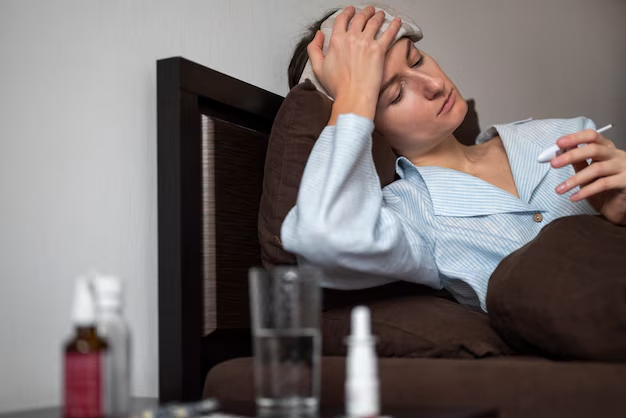
Adults who sleep less than 7 hours are more likely to report frequent mental distress a pattern consistently seen in population sleep data (CDC, 2022). If your mind revs up at bedtime, you’re not imagining it: stress chemistry can directly interfere with sleep depth, timing, and continuity. In 2026, stress related insomnia matters more than ever as hybrid work, financial pressure, and “always-on” digital habits keep many people physiologically switched on late into the night.
This guide breaks down what’s really happening between cortisol and sleep, how to tell stress-driven insomnia from other sleep disorders, and how to combine evidence-based lifestyle strategies with medical options safely. You’ll also get practical routines you can start tonight, common mistakes to avoid, and a clinician-style decision framework for when to seek professional help.
What stress related insomnia is (and how it shows up)
Stress related insomnia is typically driven by hyperarousal: your brain and body stay in “threat-detection mode” when you’re trying to power down. It can be acute (days to weeks after a stressful event) or become chronic if the pattern is reinforced by worry, irregular schedules, or maladaptive coping (e.g., alcohol, doomscrolling).
Common patterns patients describe
When it’s more than “just stress”
Stress can trigger insomnia, but it can also mask other conditions. Consider a clinical review if you have loud snoring and daytime sleepiness (possible sleep apnoea), an urge to move your legs at night (possible restless legs), panic symptoms, or low mood. In England, over 1 in 10 adults are prescribed antidepressants(NHS Digital, 2023), and mood/anxiety disorders commonly overlap with insomnia treating both often improves outcomes.
Cortisol and sleep: the biology behind the 3am wake-up
Cortisol follows a daily rhythm: it rises in the early morning to help you wake and should be relatively lower at night. Under ongoing stress, the stress-response system can become “mis-timed,” making it harder to fall asleep and easier to wake during lighter sleep stages.
How stress disrupts sleep architecture
Stress can reduce slow-wave sleep (deep sleep) and increase lighter sleep and awakenings. The result is not only fewer hours in bed, but less restorative sleep per hour. People may then try to “catch up” with naps or lie-ins, which can further shift circadian timing and worsen night-time sleep continuity.
Why screens and late-night work make it worse
Light and mental stimulation late in the evening push your brain toward alertness. Evening screen exposure is associated with delayed bedtime and reduced total sleep time, especially when paired with emotionally activating content (e.g., work emails, news). This is a key 2026 reality: more people work across time zones, and boundaries between work and rest are thinner than they were pre-pandemic.
Diagnosis approach in 2026: what to track before you treat
Insomnia treatment is more successful when you target the correct driver: stress physiology, circadian timing, learned behaviours, or an underlying medical condition. The most useful “home diagnostics” are simple and low-cost.
A 7-day sleep-and-stress snapshot (practical template)
Bring this to your GP or pharmacist patterns become obvious quickly (e.g., insomnia only on Sunday nights, or worse after late caffeine).
When to seek professional support urgently
Disclaimer:The content shared here is for general informational purposes only and does not replace medical advice. Please consult a doctor or pharmacist before using any medicine product.
Lifestyle treatment: stress management for sleep that actually works
For most people, the best first-line approach is CBT-I principles(Cognitive Behavioural Therapy for Insomnia) plus targeted stress reduction. CBT-I is widely recognised as first-line treatment for chronic insomnia in clinical guidance, with benefits that tend to persist longer than medication when adhered to.
Start tonight: a 30–60 minute “downshift” routine
Daytime levers that reduce night-time cortisol load
If you wake at 3am: what to do (and what not to do)
Do:keep lights low, avoid checking the time, and use a calm activity (paper book, gentle audio) until sleepy. Don’t:start problem-solving, scroll your phone, or stay in bed for long periods feeling frustrated this can train the brain to associate bed with wakefulness.
Medical approaches: when they’re appropriate and how to use them safely
Medication can be helpful for short-term relief, especially during acute stress (bereavement, exams, sudden life disruption). The key is using medicines as a bridgewhile you fix the drivers sleep schedule, stress load, and insomnia behaviours.
Prescription options commonly discussed in the UK
Over-the-counter options and cautions
Some OTC antihistamine-based sleep aids can cause next-day grogginess, dry mouth, and tolerance, and may be unsuitable for certain people. Herbal products vary in quality and evidence. If you’re on other medicines (including antidepressants, pain medicines, or anxiety treatments), ask a pharmacist about interactions.
Safety red flags (especially relevant to Z-drugs)
Comparison table: lifestyle vs medical options for stress related insomnia
This table helps you choose an approach based on goals, time horizon, and risk. Many patients do best with a combined plan: short-term symptom relief plus long-term behaviour change.
Approach | Best for | Typical timeline | Key benefits | Main risks/limits |
|---|---|---|---|---|
CBT-I techniques(stimulus control, sleep restriction, cognitive work) | Chronic insomnia; relapse prevention | 2–8 weeks | Durable improvements; addresses root causes | Requires consistency; can feel harder in week 1–2 |
Stress management for sleep(worry time, breathing, boundaries) | Stress-triggered onset/maintenance issues | Days to weeks | Reduces hyperarousal; improves coping | Needs repetition; benefits depend on stress load |
Short-term prescription hypnotic(e.g., zolpidem/zopiclone) | Acute crises; severe short-term impairment | Same night to 1–2 weeks | Fast symptom relief | Dependence, next-day impairment, complex sleep behaviours |
Circadian support(morning light, fixed wake time; melatonin when appropriate) | Delayed sleep timing; jet lag; shift-related disruption | 3–14 days | Stabilises sleep window | Less effective if stress hyperarousal is primary driver |
What’s changed in 2026: trends shaping stress related insomnia care
Two major shifts are influencing insomnia management in 2026: (1) wider use of digital CBT-Iand app-supported sleep coaching, and (2) increased clinical awareness of how work patterns and mental health interact with sleep. In the UK, the NHS has continued expanding digital pathways for mental health support, and insomnia screening is more commonly integrated into anxiety/depression reviews.
Digital CBT-I and wearables: useful, but don’t outsource judgement
Wearables can help spot patterns (irregular sleep windows, frequent awakenings), but they can also fuel “orthosomnia” anxiety about achieving perfect sleep scores. If your tracker makes you more stressed, consider hiding sleep metrics and focusing on behaviours: consistent wake time, reduced late caffeine, and a wind-down routine.
Stress load is rising for many adults
Global survey data continues to show elevated stress levels in many populations. For example, 41% of adults reported experiencing a lot of stress the previous dayin a long-running international poll (Gallup, 2022). When baseline stress is high, insomnia often becomes a “secondary problem” that still needs direct treatment because poor sleep amplifies stress reactivity the next day.
Medication stewardship and safety focus
Across healthcare systems, there is stronger emphasis on avoiding long-term hypnotic reliance, using the smallest effective dose for the shortest time, and pairing medication with behavioural treatment. This reflects real-world risk: insomnia is common, and about 1 in 3 adults report insufficient sleep(CDC, 2022), so even small medication risks can scale across populations.
Common mistakes to avoid (and pro tips clinicians use)
Mistake 1: spending extra time in bed “to catch up”
Extending time in bed can lower sleep efficiency and reinforce wakefulness in the sleep environment. Pro tip:set a consistent wake time and let bedtime drift earlier only when sleepiness returns.
Mistake 2: using alcohol as a sleep aid
Alcohol may shorten sleep onset but fragments sleep later and can worsen early morning awakenings. It also interacts dangerously with sedative medicines.
Mistake 3: trying to “think your way” out of insomnia at 2am
Night-time problem-solving trains the brain to associate bed with mental work. Pro tip:keep a notepad outside the bedroom; if a thought feels urgent, write a one-line reminder and return to a calming routine.
Mistake 4: ignoring the stressor because you’re focused on the sleep
If your insomnia is driven by a controllable stress source (e.g., unmanageable workload, caregiving burnout, unresolved conflict), sleep strategies help but you’ll progress faster when you also address the upstream issue. Consider practical adjustments: workload renegotiation, financial counselling, or therapy for anxiety.
Conclusion: a practical plan for better sleep under stress
Stress related insomnia is treatable, but it improves fastest when you address both the biology(hyperarousal) and the behavioursthat keep insomnia going. If you want a simple starting point, focus on consistency and a calmer pre-sleep runway.
If your sleep difficulties are persisting, consider speaking with a GP or pharmacist about a personalised plan
including whether short-term prescription support is appropriate and how to taper safely.
Disclaimer: This content is for general informational purposes only and does not replace medical advice. Please consult a doctor or pharmacist before using any medicine product.
Frequently asked questions
What is stress related insomnia?
Stress related insomnia is difficulty falling asleep, staying asleep, or waking too early due to stress-driven hyperarousal. It often includes racing thoughts, body tension, and fragmented sleep, especially during demanding life periods.
How do cortisol and sleep affect each other?
Cortisol normally rises in the morning and is lower at night. Ongoing stress can disrupt this rhythm and keep the body more alert in the evening, increasing awakenings and reducing restorative sleep.
How can I calm down fast before bed?
Use a short, repeatable downshift routine: dim lights, stop work/email, do 5 minutes of slow breathing, and write tomorrow’s priorities. Consistency matters more than intensity—do the same steps nightly to train the brain.
Should I take sleeping tablets for stress-related insomnia?
They can be appropriate short-term if insomnia is severe and impairing, but they’re best used with a clear plan and medical supervision. Pair medication with CBT-I-style strategies to reduce relapse risk when you stop.
Can stress related insomnia go away on its own?
Acute insomnia often improves as the stressor resolves. However, it can become chronic if you develop habits like irregular wake times, long lie-ins, or anxiety about sleep, so early behavioural steps help.
What’s the best stress management for sleep if I wake at 3am?
Keep lights low, avoid checking the time, and do a quiet activity until you feel sleepy again. Avoid phone scrolling and intense thinking, as both reinforce alertness and can worsen the pattern.
How long does CBT-I take to work?
Many people notice improvements within 2–4 weeks, with further gains over 6–8 weeks. The first 1–2 weeks can feel challenging because you’re changing entrenched sleep habits, but the benefits tend to be longer-lasting.
Tags: Stress Related Insomnia