
- Your cart is empty
- Continue Shopping


The Ultimate Guide To The Perfect Bedroom Environment For Sleep
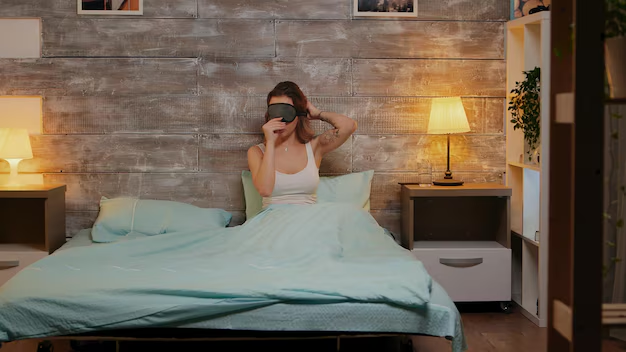
Adults who sleep fewer than 7 hours a night report more frequent mental distress and poorer overall health a pattern repeatedly seen in population data. In 2026, sleep is also under new pressure from hybrid work, late-night screen habits, and brighter, more energy-efficient home lighting that can unintentionally disrupt circadian rhythms. The good news: you can often improve sleep quality without changing your entire life by engineering a perfect bedroom environment for sleepthat supports your brain’s natural sleep signals.
This guide breaks down the key levers temperature for sleep, light control and dark room sleep benefits, noise, air quality, bedding materials, and modern sleep tech plus practical, step-by-step actions you can implement tonight. You’ll also learn common mistakes, what to do in tricky “real life” situations (partners, kids, city noise), and how to tell when it’s time to speak with a clinician.
Disclaimer: The content shared here is for general informational purposes only and does not replace medical advice. Please consult a doctor or pharmacist before using any medicine product.
Why the bedroom environment matters more than you think
Sleep isn’t a simple “off switch.” Your ability to fall asleep and stay asleep depends on a coordinated set of signals: darkness (melatonin release), a drop in core body temperature, and a sense of safety (low threat/noise). When the bedroom fights those signals too warm, too bright, too noisy your nervous system stays more alert than you realise.
Environment also affects sleep continuity(how often you wake) and sleep efficiency(time asleep ÷ time in bed). Even modest reductions in sleep efficiency can leave people feeling “tired but wired” the next day, pushing them toward caffeine, naps, or late lie-ins that further disrupt the next night.
Evidence snapshot
Get the temperature for sleep right (the fastest win)
If you do only one thing, start with temperature. Your body naturally cools slightly at night, and a cooler room helps that process along. Many sleep clinicians recommend keeping the bedroom cool often cited in the high teens Celsius while using bedding to fine-tune comfort.
Recommended ranges and how to apply them
Most guidance lands around 16–19°C (60–67°F)as a common target range for adults, though individual comfort varies (Sleep Foundation, 2023). If you wake at 3–5am sweaty or with a racing mind, overheating is a frequent hidden culprit.
2026 trend: smarter, zoned sleep cooling
By 2026, more households use app-controlled thermostats and zoned heating to cut energy bills. The sleep advantage is precision: you can cool only the bedroom at night while keeping the rest of the home warmer. If you can’t install zoning, a programmable radiator valve (where compatible) or a smart thermostat schedule can still reduce overnight overheating.
Light control and dark room sleep benefits (circadian-friendly design)
Light is the strongest external cue for your circadian rhythm. Bright light in the evening delays melatonin release; morning light helps anchor your sleep-wake timing. That’s why dark room sleep benefitsextend beyond “falling asleep faster” they also support deeper, more consolidated sleep.
What “dark” actually means
Many bedrooms feel dark but aren’t. Streetlights, hallway LEDs, and phone notifications create enough light to signal “daytime” to a light-sensitive brain. Research has linked even modest light exposure during sleep with measurable next-day metabolic and cardiovascular effects in controlled settings (Northwestern Medicine, 2022).
Practical evening lighting plan
Noise, privacy, and “micro-stress”: building a calm sleep zone
Your sleeping brain still monitors for threat. Intermittent noise (sirens, doors, neighbours) is often more disruptive than steady sound because it triggers brief arousals even if you don’t fully awaken. If you wake unrefreshed yet “think you slept,” fragmented sleep is a common explanation.
Noise reduction hierarchy (what works best)
Real-world scenario: city flat or shift-work household
If daytime sleep is necessary, treat the bedroom like a “sleep pod”: blackout curtains + eye mask, white noise, and a “do not disturb” routine at home. For shift workers, consistency matters: try to keep your sleep window as stable as your schedule allows, and use bright light exposure strategically when you need to be awake.
Air quality, allergens, and ventilation (often overlooked)
Breathing comfort is a major sleep determinant. Nasal congestion, dry air, and allergens can increase mouth breathing, snoring, and micro-awakenings. Indoor air also tends to worsen at night in tightly sealed homes, especially in winter.
Targets and simple fixes
When a purifier can help
A HEPA air purifier may reduce particulate load for people with allergies or those living near traffic. Look for a model sized to your room (CADR matched to room volume) and a quiet “sleep mode” so the device doesn’t become the problem.
Mattress, pillows, and bedding: create the right “sleep microclimate”
Your bed is your immediate sleep environment more influential than the thermostat for many people. The goal is stable comfort: neutral temperature, supported joints, and minimal tossing and turning.
Materials that support temperature for sleep
Alignment and pressure relief basics
Side sleepers often need a thicker pillow to keep the neck neutral; back sleepers usually do better with a medium loft; front sleeping can strain the neck and may benefit from a very low pillow or retraining. If pain wakes you up, it’s worth assessing mattress sagging and pillow support before assuming it’s “just stress.”
Bedroom environment benchmarks: a practical comparison table
Use this table as a quick checklist to build your perfect bedroom environment for sleep. Treat these as starting points, then personalise based on how you feel in the morning.
| Sleep factor | Benchmark target | Why it matters | Quick fix tonight |
|---|---|---|---|
| Temperature for sleep | 16–19°C(typical adult range) | Supports natural overnight cooling and sleep continuity | Lower thermostat 1–2°C; use breathable bedding |
| Light | As dark as possible | Improves melatonin timing; reduces arousals; supports dark room sleep benefits | Blackout curtains or eye mask; cover LEDs |
| Noise | Low + consistent | Prevents micro-awakenings and stress responses | White noise; earplugs; seal door gaps |
| Air quality | Fresh air; moderate humidity | Reduces congestion, dryness, allergen triggers | Ventilate 10–20 minutes; clean bedding weekly |
| Bed comfort | Neutral temperature + good alignment | Reduces pain awakenings and tossing/turning | Adjust pillow loft; lighter duvet; add topper if needed |
Common mistakes to avoid (and what to do instead)
Most sleep setup problems come from doing “reasonable” things that accidentally undermine circadian timing or comfort. Fixing these is often more effective than buying expensive gadgets.
What’s changing in 2026: sleep tech, lighting, and clinical guidance
In 2026, sleep is more “measured” than ever. Wearables and rings can estimate sleep stages and trends, and some people find that feedback motivating. The risk is over-focusing on scores (“orthosomnia”), which can increase sleep anxiety and make insomnia worse.
Best-practice use of wearables
Lighting has changed often unintentionally
LED lighting is now standard and can be very bright with high blue content. In 2026, “human-centric” and tunable lighting options are more common and affordable. If you can’t change bulbs, use lamps with warm shades and avoid overhead lighting in the evening.
Clinical trend: more emphasis on CBT-I and non-drug supports
Across sleep medicine, CBT-I (cognitive behavioural therapy for insomnia)remains the first-line treatment approach for chronic insomnia, with strong evidence of effectiveness and durable results (AASM clinical guidance summaries, 2021–2024). Your bedroom environment work complements CBT-I by reducing arousal triggers and making sleep opportunities more effective.
Step-by-step: a 7-day bedroom reset plan (practical template)
If you want momentum, use this simple one-week plan. Each step takes 10–30 minutes and compounds quickly.
Conclusion: build your sleep setup like a health intervention
A better night’s sleep is often a design problem before it’s a willpower problem. In 2026, the strongest approach is combining proven environmental fundamentals with realistic routines you can stick to.
Next step:pick just two changes to implement tonight (cooler thermostat + blackout strategy is a high-return pair). If sleep problems persist or you’re using sleep medication, speak with a GP or pharmacist about safe, evidence-based next steps and whether CBT-I support may be appropriate.
Frequently asked questions
What is the perfect bedroom environment for sleep?
A perfect bedroom environment for sleep is typically cool, dark, quiet, and well-ventilated, with comfortable bedding that doesn’t overheat you. The goal is to support circadian timing (darkness), reduce micro-awakenings (noise), and maintain thermal comfort (temperature). Personalisation matters use benchmarks, then adjust based on morning energy and night awakenings.
What is the best temperature for sleep in the UK?
Many experts recommend starting around 16–19°C for adults (Sleep Foundation, 2023). If you wake sweaty or restless, try lowering the thermostat by 1°C for a few nights. If you wake cold, keep the room cool but add layers to the bed rather than heating the whole room.
Why are dark room sleep benefits so important?
Darkness helps your brain release melatonin and maintain stable sleep. Research suggests that light exposure during sleep is associated with adverse cardiometabolic markers (Northwestern Medicine,). A darker room also reduces the chance that early morning light triggers premature waking.
Can I sleep well if I can’t make my room completely dark?
Yes use an eye mask, reposition the bed away from direct light sources, and cover small LEDs. Even partial improvements (blocking streetlight glare, dimming hallway light) can reduce awakenings. Aim for “dark enough that you’re not visually oriented,” rather than perfection.
How do I reduce noise at night without renovating?
Start with sealing gaps (door sweep, draft excluder) and adding soft materials (rug, heavier curtains). Then use a consistent masking sound (white or pink noise) at low volume if intermittent noise is the issue. Earplugs can help, but comfort and correct fit are essential.
Should I use a fan or air conditioning for sleep?
Airflow can help if overheating is disrupting sleep, and it may improve perceived comfort. Choose the quietest setting possible and avoid blowing air directly on your face if it causes dryness. If you’re waking with dry mouth, consider checking humidity and nasal congestion triggers.
What bedding is best for hot sleepers?
Breathable fabrics like cotton or linen sheets and a lower tog duvet are common starting points. Moisture-wicking materials and a washable mattress protector can reduce discomfort from sweating. If overheating persists, consider whether the room temperature for sleep is too high or whether the mattress traps heat.
How long does it take for bedroom changes to improve sleep?
Some changes (cooler temperature, darker room) can help within 1–3 nights. Others like reducing conditioned arousal by keeping work out of bed may take a few weeks. Track simple outcomes: time to fall asleep, number of awakenings, and morning alertness.
Can improving my bedroom environment reduce the need for sleeping tablets?
For some people with mild or situational insomnia, environment changes can meaningfully reduce sleep disruption. However, if you’re prescribed medication (e.g., zolpidem or zopiclone), do not change or stop it without medical advice. Use environmental improvements as a foundation and discuss a safe plan with your prescriber.
When should I talk to a GP or sleep specialist?
If insomnia lasts 3+ months, occurs at least three nights a week, or you have red flags like loud snoring/gasping, morning headaches, or excessive daytime sleepiness, seek medical input. These can indicate conditions like sleep apnoea or restless legs that require targeted treatment. A clinician can also guide CBT-I options and medication safety.